top of page


Wilton Simpson Commissioner
Termites associated with structures in Florida
West Indian drywood termite (WIDT)
(Cryptotermes brevis)


boat infestation

Identifying features
Medium species, discovered in Florida (Key West) in 1918
Number one drywood pest in Florida, only found in structures not outdoor wood
Infests wood on boats not exposed to moisture
Swarmer clear iridescent wings, head and body brown
Soldier head black, cube shaped
Swarms at beginning of the rainy season (some fly year round) at dusk to dawn
A flight of the WIDT in my lab during the early morning hours in late May

After flight the queen and king drop their wings and search for a crack, crevice, or nail hole to start their colony

After a few years the colony is growing and galleries are expanding in the infested wood.
This can only be seen if the wood is split open.

Wood flooring installed with preexisting WIDT colonies in the panels!


A cross section of a "2X4" with WIDT galleries exposed.
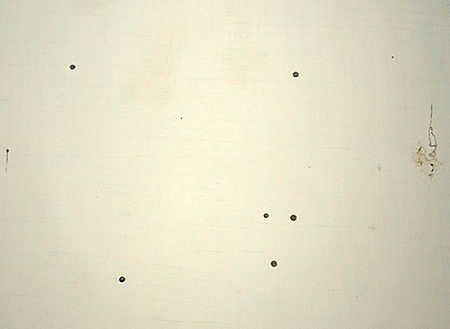
Kickout holes are easier to see on painted wood. Look up from pellet piles to find holes.
Kickout holes are small and difficult to find. This one has been sealed with liquid feces to prevent ants from entering galleries. The holes are used during flight season for swarmers to exit.

Pellets (or frass) are expelled from galleries to "clean house".

Pellets and wings.


Pellets come in an array of colors.

WIDT wings show iridescent coloration when light is reflected onto the membrane.
WIDT soldiers have plug-like head to block narrow galleries to prevent invasion by ants.
bottom of page